Eyebrow shapes get sorted into neat lists online, but almost none of them tell you which one is yours. This page does three things the usual galleries don't: it matches each shape to a face shape using named brow artists' advice (and says where they disagree), it shows what research found about where brows really peak, and it gives you a step-by-step shaping routine you can do this week.
The scanner above finds your face shape and canthal tilt from one photo, on your device, and picks brow tips to match; it also measures eye spacing, shown as a number. Use it first, then read the section for your result.
The five eyebrow shapes, and what each one does
Brow artists describe shapes by two things: how high the arch rises and how sharply it turns. The names vary from brand to brand, but these five cover almost every brow you will see. The 'usually suggested for' column comes from the face-shape advice in the next sections, all of it makeup-artist convention.
| Shape | What it looks like | Visual effect artists describe | Usually suggested for |
|---|---|---|---|
| Straight (flat) | Little or no arch; head and tail at similar height | Adds a horizontal line, so the face reads shorter | Oblong (long) faces |
| Soft arch | A gentle rise to a low, rounded peak | Balanced; softens without adding angles | Oval and square faces |
| High or angled arch | A clear peak with a defined angle | Adds vertical lift, so the face reads longer | Round faces |
| Rounded | An even curve with no distinct peak | Softens angles; repeats curves | Diamond and heart faces (avoid on round) |
| S-curve | A wave: slight dip at the head, rise at the arch, taper at the tail | Movement and lift without a hard angle | Round and square faces, per Benefit's Jared Bailey |
Map your brows in three points
Before any face-shape tweak, brow brands start from the same framework. Anastasia Beverly Hills, Benefit's Lisa Potter-Dixon (in HELLO!), jane iredale and Chanel brow artist Jimena Garcia (in Bustle) all describe it, and it is a makeup-artist convention rather than a measured standard. Hold a long, straight pencil against your face for each point:
Brands disagree on the start point. Anastasia Beverly Hills lines it up with the centre of the nostril, while Bustle and jane iredale line it up with the side of the nose toward the inner eye corner. The difference is a few millimetres. If your brows naturally start inside or outside these lines, it is usually wiser to keep your own start than to tweeze toward a rule.
- Start: a vertical line straight up from the side of your nose. The brow begins here.
- Arch: a line from the side of the nose through the outer edge of your iris, while you look straight ahead. The highest point sits on this line.
- End: a line from the outer edge of the nostril through the outer corner of your eye. The tail finishes here.
Where do eyebrows really peak? What research found
The textbook brow puts the arch directly above the outer edge of the iris (the lateral limbus). Angelo-Khattar (2020) restates that clinical convention. But when Rajabi and colleagues (2017) examined 60 women with normal brows, average age 33.6, only 10% peaked above the lateral limbus. The most common peak, in 58.3%, sat further out, between the outer edge of the iris and the outer eye corner. Another 28.3% peaked right above the outer eye corner, and 3.3% had no distinct peak.
Preference studies don't settle on one answer either. Zeng and colleagues (2024) had 76 Asian and Caucasian volunteers rate AI-generated female faces: the most appealing apex sat above the outer eye corner on Asian faces and halfway between the outer iris and the outer corner on Caucasian faces, with a preferred arch angle of about 12°. Feser and colleagues (2007) asked 357 people aged 12 to 85 to rate brow variations and found that raters up to 30 preferred lower brows with the peak in the outer third, while raters over 50 preferred higher, arched brows.
The practical point: if your natural peak sits a little further out than the map says, that is the most common arrangement in the one population that was measured, and it is preferred by some groups of raters. Don't pluck it into a textbook position. Use the map to tidy, not to redraw.
There is not one single beauty ideal for eyebrows, but at least three.
— Feser, Gründl, Eisenmann-Klein and Prantl (2007), Aesthetic Plastic Surgery
Eyebrow shape by face shape
This is the advice brow artists give most consistently. Each row is a makeup-artist convention supported by at least two published sources. Where artists disagree, the table says so, because a single confident answer would be pretending.
Face shapes are themselves stylist conventions, and many faces sit between two. FaceCheckup gives your top two shapes with percentages; if they are close, read both rows and use what they share. The face shapes guide explains each outline in detail, and the face shape detector gives you yours from a photo.
| Face shape | Try | Avoid | Where sources disagree |
|---|---|---|---|
| Round | A lifted, defined arch that peaks rather than curving evenly | Fully rounded, circular brows | Glam's Fides Baldesberger prefers straight brows; Benefit's Jared Bailey suggests an S-curve |
| Square | A soft, curved arch of medium height | Very angular or sharply arched brows | Rush suggests high arches; Soare a medium arch |
| Oblong (long) | Fuller, straighter brows with a slight arch; tails extended a little outward but level | High peaked arches; long tails that droop | - |
| Oval | Your natural soft arch; most shapes work | - | Soare suggests shorter brows; Maybelline a long brow with a lower arch at the tail |
| Heart | A soft, rounded arch with a tapered tail | Very heavy, ultra-bold brows | Soare says keep an arch; Maybelline favours soft or straight brows |
| Diamond | A rounded or gently curved brow | Sharp, peaked arches | - |
| Triangle | No sourced rule; start from the three-point map | - | - |
Your eyes change the start and the tail
Face shape decides the arch. Eye spacing and canthal tilt decide where the brow starts and how the tail finishes. FaceCheckup measures both in the same scan. It adds the tilt tips automatically; eye spacing is shown as a number only, so apply the spacing tips below yourself. All are makeup-artist conventions with two or more sources.
Close-set eyes: keep the inner start soft and set it a hair toward the temples, and extend the tail slightly past its natural end (Makeup and Beauty Blog, L'Oréal Paris, jane iredale). Avoid heavy fill at the inner brow, and don't over-tweeze the space between the brows. Some blogs say to pluck more at the inner brow for close-set eyes; jane iredale warns against it, and we side with the warning because over-plucked hair is slow to grow back.
Wide-set eyes: fill the inner start of each brow slightly closer to the centre line (jane iredale, Makeup and Beauty Blog). Avoid tweezing the brow heads further apart.
Downturned outer corners (negative canthal tilt): brush and fill the tails upward toward the temples and keep the tail no lower than the brow head (L'Oréal Paris, HighBrow Beauty). Avoid a steep, super-arched shape or a drooping tail. The canthal tilt guide explains how to check whether your tilt is really negative or just the photo.
How to read the brow part of your FaceCheckup scan
Switch on the Brow map layer. The scan draws the three-point map on your own photo: a teal line straight up from the side of your nose (where the brow starts), a yellow line up from the outer edge of your iris (where the arch peaks), and a coral line from the side of your nose through your outer eye corner (where the brow ends). Compare those three points with where your brows sit now, then use a pencil and a mirror to mark them on your face before you shape.
Under Eyes & brows in the results you will also see 'Brow height', the distance from the upper eyelid to the highest point of the brow, divided by eye width. We show it as a number only. The research we found doesn't give a reliable population range for this measurement, so we don't call any value high or low. It is most useful for comparing before and after: scan, shape or fill your brows, then scan again from the same distance and light.
Every number comes with a ± range from measuring your photo and three re-framed copies. The quality check runs first and flags a turned or tilted head, a smile, and dark or uneven light, because each of these moves the brows and the eye corners; a badly turned head or a very dark photo gets a retake request. For the cleanest read, take your glasses off and pull your hair off your forehead (optician and stylist conventions).
Shaping the brows this week, step by step
This routine works for any shape. It follows the brands' mapping method and the shared advice against over-tweezing, so you can adjust one step at a time and stop when you like what you see.
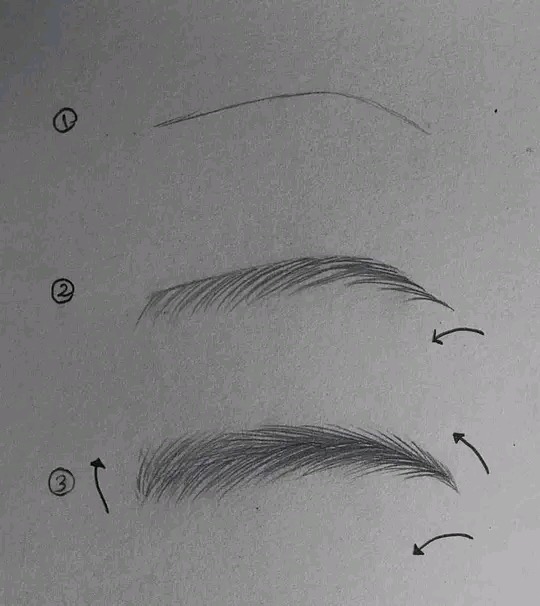
- Scan a straight-on photo to get your top two face shapes, eye spacing and tilt. Note which brow tips the result lists.
- Brush the brows straight up with a spoolie so you can see their real outline and any gaps.
- Mark the three points with a brow pencil: start above the side of the nose, arch on the line through the outer iris, end on the line from the nostril through the outer eye corner (makeup-artist convention).
- Lightly sketch the outline your face-shape row suggests, for example a lifted peak for round or a flatter line for long, without removing any hair yet.
- Live with the sketch for a day. Take a photo from 1 to 1.5 m away to judge it, not a close selfie.
- Remove only the strays clearly outside the sketch, one hair at a time, checking both brows in the mirror as you go. Clean up between the brows lightly; don't widen the gap (makeup-artist convention).
- Fill sparse areas with light, short pencil strokes that follow the direction the hairs grow.
- Re-scan in the same light and distance and compare the brow height and your photos side by side.
Mistakes that take months to undo
The brow advice from every source we used agrees on one thing: it is easy to take away and slow to put back. Over-tweezing between the brows changes how far apart your eyes and nose look, and the hair is slow to return (Fox News, quoting brow experts; jane iredale). If you want a big change in shape, our suggestion is to have it set once by a brow professional and then maintain it at home.
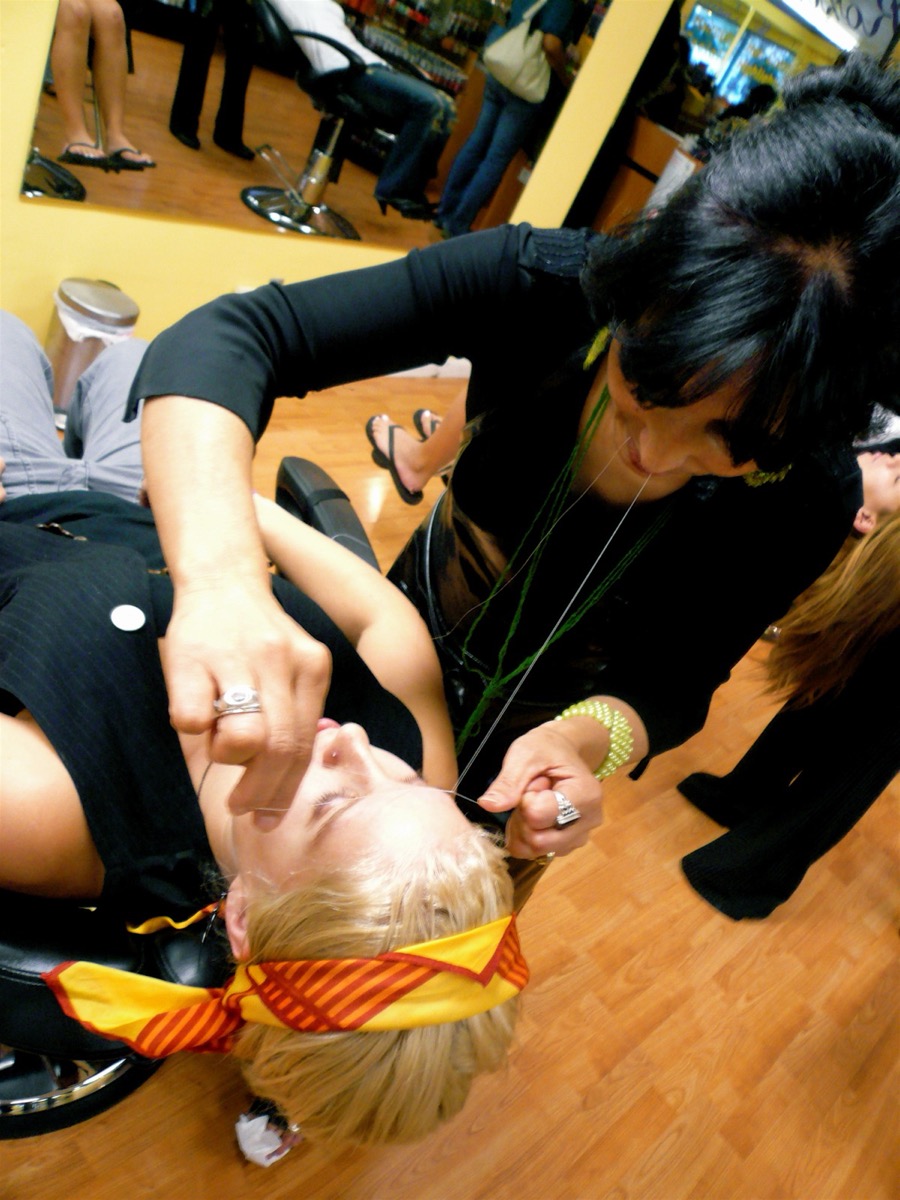
Threading, waxing and tweezing are different ways to remove hair; none of them decides the shape. Whichever you use, the shape decision comes first, from the map and your face-shape row, and the removal follows it.
Questions people ask
- What eyebrow shape suits a round face?
- Most brow artists suggest a lifted, defined arch that peaks rather than curving evenly, because it adds vertical lines. They advise against fully rounded brows. A minority prefer straight brows or an S-curve.
- How do I choose the right eyebrow shape for my face shape?
- Find your face shape first, from a straight-on photo with your hair pulled back, then use the face-shape table above. If you sit between two shapes, use the advice both rows share, and keep your natural start and peak where possible.
- Where should the arch of my eyebrow be?
- The brand map puts it above the outer edge of the iris. In the one measured group we found, only 10% of women peaked there and 58.3% peaked a little further out, between the iris and the outer eye corner (Rajabi et al. 2017). Either is normal.
- What eyebrow shape makes a chubby round face look thinner and longer?
- Artists suggest a higher, angled peak, which adds vertical lines and makes a round face read longer, and they suggest avoiding rounded brows that repeat the face's curves (makeup-artist convention).
Sources & further reading
- Rajabi MT et al. (2017), Clin Ophthalmol: Determinative factors in surgical planning of eyebrow cosmetic and reconstructive surgery
- Zeng R et al. (2024), Aesthetic Plast Surg: A gaze into the eyebrow standards of Asian versus Caucasian women
- Feser DK, Gründl M, Eisenmann-Klein M, Prantl L (2007), Aesthetic Plast Surg: Attractiveness of eyebrow position and shape in females depends on the age of the beholder
- Angelo-Khattar M (2020), Clin Cosmet Investig Dermatol: A novel onabotulinumtoxinA treatment technique (states the conventional brow ideal)
- Anastasia Beverly Hills: Brow Beginners Kit mapping guide (via DFS listing)
- HELLO! Magazine, quoting Lisa Potter-Dixon (Benefit): Eyebrow shaping rules
- jane iredale, Chelsea Simmons: How to shape and define eyebrows
- Bustle, quoting Jimena Garcia (Chanel): Eyebrow mapping
- Fox News, quoting Anastasia Soare, Joey Healy and Pamela Jeschonek: Get the perfect eyebrow shape for your face
- Rush Hair & Beauty: Best eyebrows for your face shape
- Maybelline: 7 eyebrow shapes for different face types
- HighBrow Beauty, Beverly Harris: Eyebrow shapes to flatter your face
- Refinery29, quoting Joey Healy and Jared Bailey (Benefit): Different eyebrow shapes
- Glam, Amanda Vining (quoting Sherrille Riley and Fides Baldesberger): The eyebrow tail trick that lifts your face
- Makeup and Beauty Blog: Brow shaping basics, where your brows start and stop
- L'Oréal Paris Beauty Magazine: Makeup tutorial for close-set eyes
- L'Oréal Paris Beauty Magazine: Makeup tutorial for downturned eyes
Read next
- Canthal tilt
Canthal tilt is the angle from your inner to outer eye corner. Measure each eye free, no sign-up, with head-roll correction and published averages.
- Negative canthal tilt
Negative canthal tilt means the outer eye corner sits lower than the inner one. Check if yours is real or just the photo, and see makeup and brow options.
- Face shapes
Face shapes explained: oval, round, square, oblong, heart, diamond and triangle, how stylists define each, and a free detector with no sign-up.
- Face shape detector
Face shape detector that's free with no sign-up and runs on your device: it measures forehead, cheekbones, jaw and length, then gives your top two shapes.
- Facial thirds
Facial thirds measured free on your photo, no sign-up: hairline, brows, nose base and chin drawn for you, plus how rarely thirds are equal in studies.
- Is my forehead big?
Big forehead or just a photo angle? Free test, no sign-up: measure your forehead on your own photo, then see haircuts, bangs and frames that help.
Part of Canthal tilt. Take the full free attractiveness test on the FaceCheckup home page.

Sukie · Founder and editor
Sukie built FaceCheckup because she always wanted a face tool that explains its numbers and tells you what to do with them, and nothing on the market did both. She checks every measurement on the site against published research and labels every tip for what it is: research, or stylist convention.
About this site · How pages are checked · Last updated October 23, 2026
FaceCheckup is for information and entertainment. It measures proportions in one photo; it is not a medical, psychological or cosmetic-surgery assessment, and it cannot tell you your worth.