An oval face shape is the one stylists call the easiest to dress, because its widths taper evenly from the cheekbones to the forehead and jaw and no single feature dominates. That reputation also makes it the shape people most want to have, and one people often claim by eye.
The usual mix-up is with oblong: both shapes are soft and longer than they are wide, and the difference is a matter of degree. The second is with round, when full cheeks or a smiling photo shorten how long the face looks.
This page gives the professional definitions, a side-by-side test for oval, oblong and round, what the research can and can't tell you, and the haircut, glasses, brow, makeup and beard conventions for an oval face, with the source behind each.
Check your own face: oval face shape
Tick the box to scan your own photo, or try the example first.
- 100% free
- No sign-up
- Photo never leaves your device
- Unlimited scans
Best results: face the camera at eye level, neutral expression, lips together, hair off the forehead, soft light from the front, phone at arm’s length.
What makes a face oval
Four traits define it, and every source we read agrees on three of them. The face is longer than it is wide. The cheekbones are the widest point. The jaw is rounded rather than angular, and the chin is soft rather than pointed. The fourth trait, whether the forehead is wider than the jaw, is where sources part ways.
Celebrity hairstylist Paul Labrecque, quoted by TODAY, is the only source that puts a number on it: on an oval face “the length is equal to one and a half times the width.” The Art of Manliness, written with barber Thad Forrester, says “face length is greater than the width of the cheekbones, and forehead is wider than the jawline.” Optometrist Dr. Catherine Ong, writing for Zenni Optical, describes “balanced proportions, slightly wider cheekbones, gentle narrowing at the forehead and jaw.” All About Vision, reviewed by a certified optician, says an oval face “features a slightly narrower forehead and a rounded jawline.”
So the forehead may be a touch wider than the jaw or a touch narrower; what matters is that both are only a little narrower than the cheekbones and the outline curves smoothly between them. A clearly wider forehead and a pointed chin move you toward heart. A clearly narrower forehead and jaw, with cheekbones that stand out, move you toward diamond.
Oval, oblong or round? A side-by-side test
Most people who are unsure are choosing between these three. Use the table with a straight-on photo or a mirror, hair pulled back, mouth closed. Length is the first question, the sides are the second, and the jaw is the tie-breaker.
The numbers in the last row are FaceCheckup's own reference values. No stylist or optician source gives a numeric boundary between oval and oblong, so we publish ours rather than hide them. They are measured from the top of the face mesh on the upper forehead, not from the hairline, so they are smaller than the “one and a half times” tape-measure rule and can't be compared with it directly. On our scale, if your other measurements are typical, a length ratio around 1.24 sits halfway between the oval and oblong references, and the detector will show both with similar percentages.
| Check | Oval | Oblong | Round |
|---|---|---|---|
| Length vs width | Clearly longer, about 1.5× on a tape measure from the hairline | Noticeably longer than oval | About equal |
| Sides | Curve in gently above and below the cheekbones | Long, fairly straight cheek line | Full, curved |
| Widest point | Cheekbones | Forehead, cheekbones and jaw similar | Cheekbones |
| Jaw and chin | Rounded, softly tapering | Rounded, or squarer in the rectangle variant | Soft with few angles |
| FaceCheckup reference length ÷ width (mesh) | 1.17 | 1.31 | 1.05 |
Is oval really the ideal face shape?
You will often read that oval is the ideal. That is a stylist's shorthand, not a finding about beauty. Stylists aim many haircuts at making other shapes look more oval, so oval becomes the reference point, and an oval face needs the least correcting. Matrix puts it plainly: “just about any hairstyle will suit your oval face shape.”
Research on facial attractiveness does not single out face shape. Gillian Rhodes' 2006 review in the Annual Review of Psychology concluded that averageness, symmetry and sexual dimorphism are attractive across cultures; face shape is not among the established factors. We could not find a study showing that oval faces are rated more attractive than other shapes, so we don't claim it. FaceCheckup does not rank face shapes, and its Balance Score is not a measure of how attractive anyone finds you.
We also found no reliable study of how common the oval shape is. Some sites quote exact prevalence percentages, but they come from their own unexplained app data. We would rather tell you we don't know than invent it.
What suits an oval face
The short version: you get to choose by taste, hair texture and lifestyle rather than by correction. The longer version is below, organised by what you would change. Each item carries the label from our rulebook so you know whether it comes from stylists, opticians or makeup artists. Every rule has at least two professional sources, listed at the foot of the page.
- Haircut (stylist convention): pick a cut for your hair texture and lifestyle rather than your face shape; short, long, layered or one-length all suit an oval face. Matrix, the Seattle Times' Aveda educator and Cosmopolitan's stylists all agree on this.
- Short option (stylist convention): if you want a change, a bob that grazes the chin, either angled or blunt, shows off balanced proportions without needing to correct anything.
- Bangs (stylist convention): any fringe works. A full fringe that lands between brow and lashes, or curtain bangs, are the classic picks.
- Men's cut (stylist convention): keep the sides closely cropped and wear the top swept up and back or side-parted. Barbers quoted by GQ Middle East and The Art of Manliness also say to skip a heavy fringe, which shortens the face for no benefit.
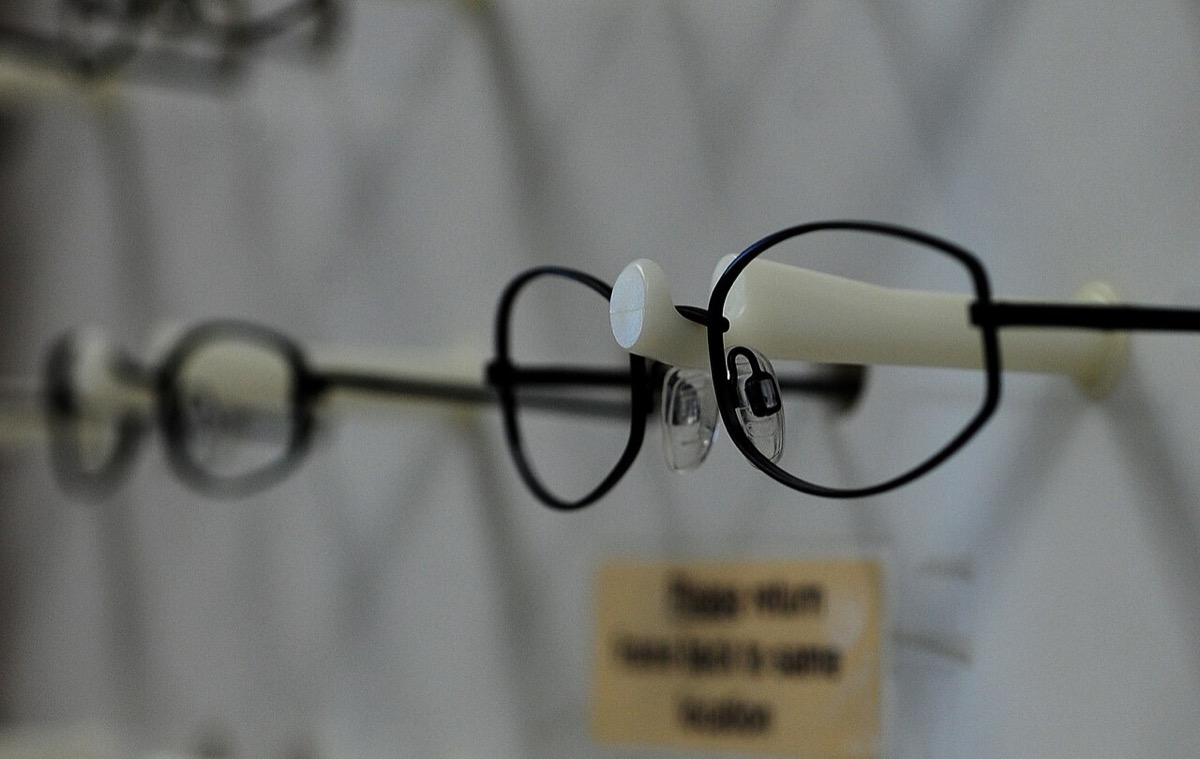
- Glasses (optician convention): pick frames about as wide as, or slightly wider than, the widest part of your face. Within that, experiment freely; rectangular, geometric, cat-eye, aviator and oversized frames all suit an oval face, according to All About Vision, WebMD and Vision Express.
- Brows (makeup-artist convention): keep a natural, soft arch and follow your own brow line. Sources disagree on length: Anastasia Soare prefers slightly shorter brows on oval faces, Maybelline a longer brow with a lower arch at the tail.
- Makeup (makeup-artist convention): keep contour light, a soft sweep under the cheekbones and at the temples. For blush, choose by look: the apples for a fresh look, the tops of the cheekbones for a sculpted one, and avoid placing it low under the cheekbones.
- Beard (stylist convention): any length you can grow evenly, from stubble to full, as long as the cheek and neck lines are kept tidy.
Check yours on your own photo
The most reliable way to settle oval versus oblong or round is to measure the same face several times under the same conditions. Use the face shape detector: prop your phone about 1 to 1.5 m away at eye level, set the timer, pull your hair back, take your glasses off and keep a neutral face. The quality check flags a turned or tilted head or a too-close camera, and asks for a retake when the head is turned past 15°.
Then switch on the Outline and Widths layers. The 1.17 and 1.31 references above use the top of the face mesh, while the Face length ÷ width number in your results runs from the hairline, so don't compare them directly. Look at the jaw line: if it sits close to the cheekbone line in width, you are drifting toward square or oblong; if it is clearly narrower and curves into the chin, that is oval. Read the top two shapes and their percentages. Oval with a clear lead means the advice above applies. Oval and oblong close together means you should also read the oblong face shape guide and favour the advice the two share, such as side volume and a fringe to brow level.
Take three photos. The detector reports a ± range with every number because a single photo can move by a few hundredths; three photos that agree are worth more than one that looks definitive. If you want the whole picture, the main scan on the FaceCheckup homepage also measures your facial thirds and symmetry, which tell you more about forehead height and balance than the shape label does.
Three things to try this week
Because an oval face needs no correcting, the best use of the result is to experiment where other shapes can't. First, try the fringe you have been avoiding: curtain bangs can grow out in weeks, and stylists list a fringe among the safest changes for oval faces. Second, at your next eye test, try one frame shape you would normally skip, such as a cat-eye or an oversized square, while keeping the width close to the widest part of your face. Third, retake your profile photo with the camera at or slightly above eye level and about 1.5 m away, using the rear camera's 2x lens; photographers recommend this setup, and the distance research behind it is solid.
If your result said oval but your forehead looks tall to you, check your upper third on the main scan before choosing a fringe: a fringe is the stylist's usual answer to a tall forehead on any shape. For a side-by-side of every cut, see hairstyle for face shape.
Questions people ask
- How do I know if my face is oval?
- Pull your hair back and look straight at a mirror or a photo. If your face is clearly longer than it is wide, widest at the cheekbones, and curves gently into a rounded chin without a sharp jaw corner, it is oval. Measure it with the detector to see how close you sit to oval and its neighbours.
- What is the difference between an oval and an oblong face?
- Length and sides. An oblong face is longer than an oval one, and its forehead, cheekbones and jaw are closer to the same width, so the sides look straighter. An oval face tapers gently above and below the cheekbones.
- Is an oval face shape rare?
- We could not find a published study measuring how common any face shape is. Prevalence figures online come from unexplained app data, so we don't repeat them.
- Is an oval face attractive?
- Stylists call it the most versatile shape, not the most attractive. Research on facial attractiveness points to averageness and symmetry, not to face shape, and we found no study showing oval faces are rated higher.
- Can an oval face look round?
- Yes. Full cheeks, a smile, a close-up selfie or a low camera can all shorten how long a face looks. Measure a neutral, straight-on photo taken from about 1.5 m.
- What haircut suits an oval face?
- Almost any. Stylists say to choose by hair texture and lifestyle; a chin-grazing bob, long layers, a pixie or one length all work. Men can keep short sides and a swept-back or side-parted top.
- Do bangs suit an oval face?
- Yes, for women any fringe works, including a full fringe between brows and lashes or curtain bangs. Barbers tell men to skip a heavy fringe because it shortens an oval face.
- What glasses suit an oval face?
- Most shapes do. Opticians suggest keeping the frame about as wide as the widest part of your face, then choosing freely among rectangles, cat-eyes, aviators and geometric frames.
- Can you have an oval face and a strong jaw?
- If the jaw is close to the cheekbones in width and has a defined corner, you are likely between oval and square or oblong. The detector will show both shapes; read both guides.
Sources & further reading
- TODAY (NBC), Anna De Souza quoting hairstylist Paul Labrecque: Need a haircut? Here's how to get the best style for your face shape
- The Art of Manliness, with barber Thad Forrester: The Best Haircut for Your Face Shape
- Zenni Optical, Dr. Catherine Ong, OD: What Is My Face Shape?
- All About Vision, Erinn Morgan (reviewed by Chloe Tauaefa, ABOC): The Best Glasses for Your Face Shape and Skin Tone
- Matrix, Jackie Summers: How To Choose The Best Hairstyle For Your Face Shape
- The Seattle Times (Star-Tribune), Allie Shah: Look to the stars' face shapes for haircut do's and don'ts
- Cosmopolitan via AOL (2025), Lia Mappoura: The Best Haircuts and Styles for Every Face Shape
- L'Oréal Paris USA: The Best Haircuts for Your Face Shape
- TODAY (NBC), Anna De Souza: The most flattering bangs according to your face shape
- GQ Middle East, Adam Hurly quoting barber Matty Conrad: What's the best haircut for your face shape?
- WebMD, Amber Felton (reviewed by Whitney Seltman, OD): How to Pick the Right Glasses for Your Face Shape
- Vision Express: Face shape style finder
- Maybelline India: 7 Eyebrow Shapes For Different Face Types
- Fox News, quoting Anastasia Soare: Get the perfect eyebrow shape for your face
- e.l.f. Cosmetics, Emma Izquierdo: How to Properly Contour Your Face Based on Your Face Shape
- L'Oréal Paris USA, Roberto Rodriguez: How to Apply Blush for Your Face Shape
- Philips UK: The best beards for face shapes
- Ward B et al. (2018), JAMA Facial Plastic Surgery: Nasal Distortion in Short-Distance Photographs: The Selfie Effect
- Rhodes G (2006), Annual Review of Psychology 57:199-226: The evolutionary psychology of facial beauty
Read next
- Face shapes
Face shapes explained: oval, round, square, oblong, heart, diamond and triangle, how stylists define each, and a free detector with no sign-up.
- Face shape detector
Face shape detector that's free with no sign-up and runs on your device: it measures forehead, cheekbones, jaw and length, then gives your top two shapes.
- Oblong face shape
Oblong face shape: clearly longer than wide, with forehead, cheekbones and jaw of similar width. How it differs from oval, plus haircuts, glasses and brows.
- Round face
Round face: length close to width, widest at the cheeks, soft jaw with few angles. Learn how to tell it from square or oval, then get sourced styling tips.
- Haircut finder
Haircut depending on face shape: scan one photo free, no sign-up, to find your shape, then see sourced cuts to try and to avoid, for women and men.
- Eyebrow shapes
Eyebrow shapes explained: soft arch, high arch, straight, rounded and S-curve, matched to your face in a free scan with no sign-up and a three-point map.
Part of Face shapes. Take the full free attractiveness test on the FaceCheckup home page.
Sukie · Founder and editor
Sukie built FaceCheckup because she always wanted a face tool that explains its numbers and tells you what to do with them, and nothing on the market did both. She checks every measurement on the site against published research and labels every tip for what it is: research, or stylist convention.
About this site · How pages are checked · Last updated October 23, 2026
FaceCheckup is for information and entertainment. It measures proportions in one photo; it is not a medical, psychological or cosmetic-surgery assessment, and it cannot tell you your worth.