A round face is defined by two things at once: proportions that are nearly as wide as they are long, and a soft outline with almost no corners. Revlon Professional's definition is the shortest version we found: the width and length of the face are equal, and a round face has few to no angles. The second half matters as much as the first, because a square face shares the same proportions and differs only at the jaw.
Check your own face: round face
Tick the box to scan your own photo, or try the example first.
- 100% free
- No sign-up
- Photo never leaves your device
- Unlimited scans
Best results: face the camera at eye level, neutral expression, lips together, hair off the forehead, soft light from the front, phone at arm’s length.
Is my face round, or are my cheeks just full?
This is the question people actually ask, often in those words. The honest answer is that a photo, a mirror and our scanner all see the same thing: the outline of your face as it looks today, skin and soft tissue included. None of them can see bone. So if your cheeks are full, they widen the outline, and a face can read rounder at one weight than at another.
There is research behind that, though it is about a related measure rather than face shape itself. In a 2015 meta-analysis of every peer-reviewed study they could find, Geniole and colleagues reported that facial width-to-height ratio, a cheekbone-width measure, correlated with body mass index at r = .31. That is a real but moderate link: weight moves face-width measures somewhat, and plenty of other things move them too.
Two practical tests help. First, look at the jaw corners rather than the cheeks. A round shape has a soft jaw line that curves continuously into the chin; full cheeks on a face with defined jaw corners usually read as square or oval once you measure. Second, check your photo. Smiling, an open mouth or a close-up selfie all widen the lower face, which is why the passport-photo rule from the U.S. Department of State asks for a neutral expression with the mouth closed, and why our quality check flags 'Smiling' before it measures anything.
What stylists and opticians mean by round
The definitions line up well. Matrix calls the round face nearly as wide as it is long. Eyecare Business, an optical trade journal, describes it as full, as wide as it is long, with few angles. Barber Thad Forrester, writing with the Art of Manliness, adds the width detail: the cheekbone measurement is larger than the forehead and jawline measurements, which are about the same as each other.
Put together, that is three checks: length close to width; cheekbones as the widest point, with forehead and jaw similar to each other; and a jaw with little angle. The diagram shows how round sits next to its two nearest neighbors.
Full, as wide as it is long, with few angles.
— Susan P. Tarrant, Eyecare Business (2001)
Round, square and oval side by side
Sources agree that round and square both have length roughly equal to width. The only separator in every definition we read is how angular the jaw is. Oval differs on length instead. The right-hand column gives the reference points our classifier uses for each shape: our own settings, anchored on Google's canonical face model, not population averages.
| Shape | Length vs width | Widest point | Jaw | Our reference point |
|---|---|---|---|---|
| Round | About equal | Cheekbones | Soft, rounded, few angles | Length 1.05x width, jaw angle 138° |
| Square | About equal | Forehead, cheekbones and jaw similar | Angular, defined corners | Length 1.08x width, jaw angle 125° |
| Oval | Clearly longer (stylists quote about 1.5x, hairline to chin) | Cheekbones | Rounded, slightly narrower than forehead | Length 1.17x width, jaw angle 132° |
Reading a round result on FaceCheckup
Our face shape detector reads four numbers from 478 landmarks: forehead and jaw width as shares of cheekbone width, face length against width, and the front-view angle at each jaw corner. A round reading needs the length figure low and the jaw angle wide (a blunter corner). If your length is low but your jaw angle is narrow, expect square near the top instead, which is the correct call for a face with defined jaw corners.
Two details trip people up. First, the length we use runs from the top of the landmark mesh, on the upper forehead, to the chin, not from the hairline. That is why our numbers sit lower than the 'one and a half times' figure Paul Labrecque gives TODAY for an oval face: compare yourself with the reference points, not with the 1.5. It also means a high or receding hairline doesn't push you out of round. Second, the jaw angle is a front-view outline angle, not the gonial angle of the jawbone, which studies measure on CT scans; a photo can't measure bone.
On the result screen, open Face shape and switch on Outline and Widths. Each number has a ± range from your photo and three re-framed copies; if round and square are within a few points of each other and the range on your jaw angle is wide, take a second photo in even light and look again.
Take a photo that doesn't invent roundness
Most false round readings come from the photo, not the face. These steps come from our rulebook, with the label each carries.
- Prop the phone about 1 to 1.5 m away at eye level and use the timer. Ward and colleagues' 2018 model found a camera about 30 cm from the face makes the nasal base look roughly 30% wider than at 1.5 m, which skews width ratios (research-supported).
- Keep a neutral face with the mouth closed; a smile widens the cheeks and lower face (optician convention, from passport-photo rules).
- Pull your hair back off the forehead and away from the jaw so the outline is visible (stylist convention).
- Take your glasses off (optician convention).
- Stand in even window light with no hard shadow under the cheekbones or chin (photographer convention).
- Look straight at the lens. The scanner corrects small head turns, but over 15° it asks for a retake.
Haircuts that suit a round face
Stylists treat a round face the same way almost everywhere: add vertical lines, avoid horizontal ones at the widest point. For women, Matrix's Jackie Summers advises keeping the length just below your jawline to elongate the roundness, and InStyle's stylists suggest longer layers or a lob. If you want short hair, L'Oréal Paris and the Seattle Times both point to height at the crown, such as a layered pixie, rather than width at the sides. A side part or an asymmetric line breaks up the symmetry (Cosmopolitan, Revlon Professional, TODAY).
The cut nearly every source says to skip is a rounded bob that ends at the chin or cheeks, because it repeats the round outline. That is where the 'lob versus bob' confusion online comes from: a lob that falls below the jaw is recommended, a chin-length rounded bob is not. For bangs, choose soft side-swept or curtain bangs; heavy straight-across bangs add a horizontal line and fullness (TODAY's Edmondo Blando, Huda Beauty).
For men, barbers quoted by GQ Middle East and the Art of Manliness agree: short, lean sides with height and texture on top, such as a quiff, French crop or pompadour, and no bulky sides or forward fringe. Our haircut depending on face shape finder lays out every shape's cuts in one table, for women and men, and picks yours from a photo. All of the hair advice here is stylist convention.
Glasses, brows and beards
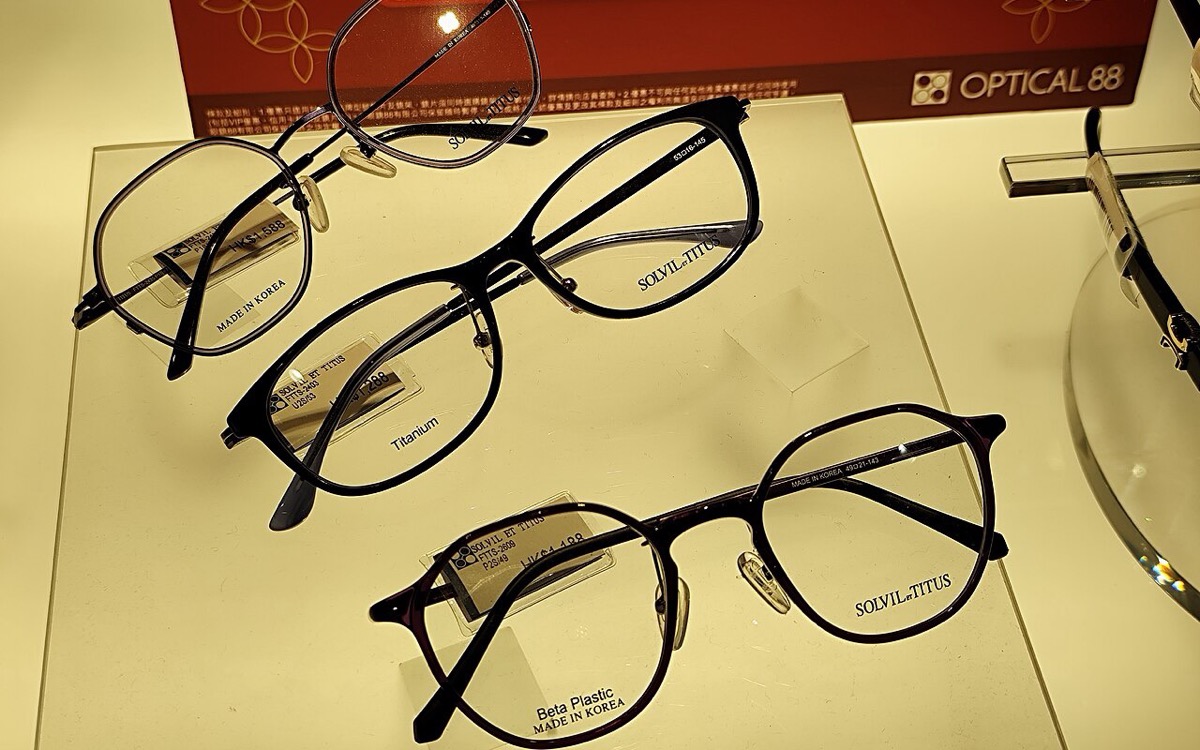
Opticians recommend contrast: rectangular, square or geometric frames that are wider than they are deep. All About Vision suggests angular narrow frames to lengthen the face, WebMD names rectangular, cat-eye and geometric frames, and Specsavers says a rounder face should choose a rectangle frame. Avoid small, fully round lenses, which echo the shape, and pick frames with some visual weight; All About Vision notes big, thick frames can bring structure to a soft-featured round face. A clear or thin bridge is a further optician tip (Reliant Medical Group, Vision Express).
For brows, most makeup-artist sources want a lifted arch with a defined peak rather than an even curve: Joey Healy, quoted by Fox News, says the arch should taper to a sharp point, and Rush and HighBrow Beauty agree. Fully rounded brows are the shape to avoid (Rush, Maybelline). Benefit's Jared Bailey, in Refinery29, prefers a curved S-shape that elongates round and square faces, so sources don't all want a sharp peak.
For beards, put length at the chin, not the cheeks: an extended goatee, Van Dyke or a beard kept shorter on the sides (Pall Mall Barbers, FashionBeans, Philips). The Art of Manliness warns against very short stubble on a round face, and Harry's against wide, bushy beards that make a round face look rounder. These are stylist conventions.
Makeup and photo lighting
For contour, Patrick Ta, e.l.f. and AARP's makeup artists all shade the sides of the forehead and temples, the hollows under the cheekbones and along the jaw, with highlight down the center of the face. For blush, L'Oréal's Roberto Rodriguez sweeps it along the tops of the cheekbones toward the temple rather than onto the center of the apples (makeup-artist convention).
In photos, the lighting pattern matters more than the pose. Photographers call it short lighting: turn slightly and let the window light fall on the side of your face farther from the camera, so the near cheek is in soft shadow. SLR Lounge's Pye Jirsa says it visually narrows a wider face, and The Lens Lounge says it makes faces seem longer. Broad lighting, with the lit side facing the camera, does the reverse. The trade-off is that short lighting shows more skin texture (photographer convention).
What a round face is not
It isn't a weight label, a flaw or a ranking. It is a stylists' shorthand for proportions, used to decide where to put length and where to put width. Our scanner reports it the same way: as the closest of seven conventional shapes, with the next two and the measured widths behind the call, and without any judgment attached.
If you want one thing to do this week, move your part to the side and photograph yourself from 1.5 m in window light. Then, before your next cut, run the finder on that photo and bring its haircut rows to the salon.
Questions people ask
- How do I know if I have a round face or a square face?
- Look at the jaw corners. Both shapes are about as wide as they are long, but a square face has angular, defined corners where the jaw turns toward the chin, and a round face curves smoothly from cheek to chin. On FaceCheckup, a wider jaw angle points to round and a narrower one to square.
- Does a round face make you look younger?
- We couldn't find a study that tests this for face shape as stylists define it, so we won't claim it. What research does show is that photo conditions, like camera distance, change how the same face is judged, so compare photos taken the same way.
- What is the best haircut for a round face?
- Stylists most often recommend length that falls below the jaw, such as a lob or long layers, a side part, and height at the crown if you go short. Men are usually advised to keep the sides short with height and texture on top. Avoid a rounded, chin-length bob and heavy blunt bangs.
Sources & further reading
- Revlon Professional: What Hairstyle Suits Me?
- Susan P. Tarrant (Eyecare Business, 2001): All Shapes and Sizes
- Brett and Kate McKay with barber Thad Forrester (Art of Manliness): The Best Haircut for Your Face Shape
- Jackie Summers (Matrix): How To Choose The Best Hairstyle For Your Face Shape
- Anna De Souza, quoting Paul Labrecque (TODAY): Need a haircut? Here's how to get the best style for your face shape
- Anna De Souza, quoting Edmondo Blando (TODAY): The most flattering bangs for your face shape
- Nicole Catanese and Krista Carter (InStyle via AOL, 2024)
- Lia Mappoura (Cosmopolitan via AOL, 2025)
- L'Oréal Paris USA: The Best Haircuts for Your Face Shape
- Allie Shah (Seattle Times / Star-Tribune, 2006): Face shapes for haircut dos and don'ts
- Huda Beauty: Best bangs for your face shape
- Adam Hurly, quoting Matty Conrad (GQ Middle East): What's the best haircut for your face shape?
- Erinn Morgan, reviewed by Chloe Tauaefa, ABOC (All About Vision): The Best Glasses for Your Face Shape
- All About Vision: Glasses for a round face shape
- Amber Felton, reviewed by Whitney Seltman, OD (WebMD): How to pick the right glasses for your face shape
- Specsavers Australia: Tips to framing your face with the perfect pair of glasses
- Dan Delisle, Registered Optician (Reliant Medical Group, 2022)
- Vision Express: Face shape style finder
- Fox News Lifestyle, quoting Anastasia Soare and Joey Healy: Get the perfect eyebrow shape for your face
- Rush Hair & Beauty: Best eyebrows for your face shape
- Beverly Harris (HighBrow Beauty, 2018): Eyebrow shapes to flatter your face
- Maybelline India: 7 eyebrow shapes for different face types
- Erika Stalder, quoting Jared Bailey (Refinery29): Different eyebrow shapes
- Pall Mall Barbers: Best beard styles for different face shapes
- Al Hardacre (FashionBeans): The right beard for your face shape
- Philips: Top beard styles for round face shapes
- Brett McKay with barber Thad Forrester (Art of Manliness): Guide to choosing the right beard style
- Harry's: Beard styles for every face shape (2026)
- Patrick Ta Beauty: How to contour and highlight based on your face shape
- Emma Izquierdo (e.l.f. Cosmetics): How to contour based on your face shape
- Anissa Gabbara (AARP Sisters): Easy contouring tips to balance your face shape
- Roberto Rodriguez (L'Oréal Paris USA): Blush by face shape
- Pye Jirsa (SLR Lounge, 2019): Short lighting
- Jane Allan (The Lens Lounge, 2019): Short lighting and broad lighting
- Geniole SN, Denson TF, Dixson BJ, Carré JM, McCormick CM (2015), PLOS ONE: Evidence from meta-analyses of the facial width-to-height ratio as an evolved cue of threat
- Ward B, Ward M, Fried O, Paskhover B (2018), JAMA Facial Plastic Surgery: Nasal distortion in short-distance photographs: the selfie effect
- Bakan A et al. (2022), Cureus: Comparison of the gonial angle with age and gender using cone-beam CT
- U.S. Department of State: Passport photo requirements
Read next
- Face shapes
Face shapes explained: oval, round, square, oblong, heart, diamond and triangle, how stylists define each, and a free detector with no sign-up.
- Face shape detector
Face shape detector that's free with no sign-up and runs on your device: it measures forehead, cheekbones, jaw and length, then gives your top two shapes.
- Haircut finder
Haircut depending on face shape: scan one photo free, no sign-up, to find your shape, then see sourced cuts to try and to avoid, for women and men.
- Oval face shape
Oval face shape: longer than wide, widest at the cheekbones, softly rounded jaw. How to tell oval from oblong or round, and the cuts and frames that suit it.
- Male face shapes
Male face shapes, explained: the 7 outlines barbers use, what research says differs in men's faces, and a sourced haircut, beard and frame plan per shape.
- Jawline rating
Jawline rating from a front photo, free with no sign-up: jaw-to-cheekbone width and jaw angle drawn on your face, plus beard, hair and photo tips.
Part of Face shapes. Take the full free attractiveness test on the FaceCheckup home page.
Sukie · Founder and editor
Sukie built FaceCheckup because she always wanted a face tool that explains its numbers and tells you what to do with them, and nothing on the market did both. She checks every measurement on the site against published research and labels every tip for what it is: research, or stylist convention.
About this site · How pages are checked · Last updated October 23, 2026
FaceCheckup is for information and entertainment. It measures proportions in one photo; it is not a medical, psychological or cosmetic-surgery assessment, and it cannot tell you your worth.