A heart shaped face is one of the easiest shapes to describe and one of the easiest to confuse with its neighbors. Every source we checked agrees: broad on top, narrow at the bottom. Paul Labrecque, quoted by TODAY, puts it plainly: your face is widest at the forehead and narrower at the jawline. Optical writers at All About Vision describe the same thing as a wide top third and a narrow bottom third.
The trouble starts in the middle. If your cheekbones are the widest point and your forehead is narrower, you are closer to diamond. If your forehead is only slightly wider than a softly rounded jaw and your face is clearly long, you are closer to oval. This page shows where those lines fall, how our free scanner measures them on your own photo, and what stylists, opticians and makeup artists recommend once you know.
Check your own face: heart shaped face
Tick the box to scan your own photo, or try the example first.
- 100% free
- No sign-up
- Photo never leaves your device
- Unlimited scans
Best results: face the camera at eye level, neutral expression, lips together, hair off the forehead, soft light from the front, phone at arm’s length.
Three cues that make a face heart shaped
Stylists and opticians describe the heart shape with three cues. You don't need all three to be dramatic; you need them to point the same way.
The first and most important cue is width at the top. L'Oréal Paris gives the simplest home test of any source we read: if your brows are noticeably wider than your jaw, you have a heart-shaped face. Zenni's optometrist Dr. Catherine Ong describes a broad forehead with cheekbones tapering to a smaller jaw, and Susan Tarrant, writing in the optical trade journal Eyecare Business, says the face is widest at the forehead and narrows at the chin.
The second cue is a narrow jaw. In a heart shape the jaw corners sit well inside the line of the forehead and cheekbones, so the sides of the face run inward as they go down. The third cue is the chin, which is usually small or pointed. A widow's peak often gets mentioned too, but none of the definitions we rely on require one, so treat it as a common companion rather than a test.
Length is not part of the definition. A heart shaped face can be fairly short or fairly long; what matters is the taper from top to bottom. InStyle alone calls it wider than long, which conflicts with every other definition, so we don't use that.
Heart, diamond, oval or triangle? Where the lines fall
Most people who search for this shape are really asking a comparison question: is my face heart shaped or oval? The table below lines up the four shapes it gets confused with, using the same three widths and the chin. The last column shows the reference points our classifier uses. Those are our settings, anchored on Google's canonical face model and shifted in the direction each stylist definition describes. They are not population averages, and nobody has published a population average for face shapes that we could verify.
The one naming trap worth knowing: 'triangle' means opposite things in different guides. Matrix groups heart and triangle together as narrow at the chin, while opticians (All About Vision, Eyecare Business, Zenni) use triangle, or pear, for a jaw that is wider than the forehead. We follow the opticians, so on FaceCheckup triangle is the upside-down heart.
| Shape | Widest point | Jaw and chin | How it differs from heart | Our reference point |
|---|---|---|---|---|
| Heart | Forehead, or forehead and cheekbones about equal | Clearly narrower jaw; small or pointed chin | - | Forehead 97%, jaw 72% of cheekbone width |
| Diamond | Cheekbones | Narrow jaw and narrow chin | Forehead is also narrow, so the top doesn't flare | Forehead 86%, jaw 73% |
| Oval | Cheekbones | Softly rounded jaw, only slightly narrower than the forehead | Gentler taper; the jaw isn't pinched in | Forehead 92%, jaw 77% |
| Triangle (pear) | Jaw | Full jaw, wider than the forehead | Exact opposite taper | Forehead 86%, jaw 85% |
How FaceCheckup decides whether you're heart shaped
Eyeballing a mirror works poorly for this shape because the decisive difference is a few percent of width at the temples and jaw. Our scanner measures it instead. It finds 478 landmarks on your photo with Google's MediaPipe Face Landmarker, entirely on your device, and reads four numbers: forehead width as a share of cheekbone width, jaw width as a share of cheekbone width, face length against width, and the front-view angle at the jaw corner.
Those four numbers are compared with seven reference points, one per shape, and the distances are turned into percentages. You see the closest shape first with its percentage, then the next two closest with theirs, so a borderline face reads as 'heart, with oval close behind' rather than a flat label. Under it the scanner prints your actual forehead and jaw percentages and your jaw angle, so you can check the call yourself against the table above. If heart and oval are close, believe both: many faces genuinely sit between two shapes, and the styling advice for the two overlaps more than it differs.
To read it on the result screen, open the Face shape group and switch on the Outline and Widths layers. The three width lines are drawn on your own photo. If the top line is clearly the longest and the bottom line clearly the shortest, that's the heart pattern. Every number carries a ± range, which is the spread across your photo and three re-framed copies of it. A wide range means the photo, not your face, is the uncertain part.
For a clean reading, pull your hair back off your forehead and away from your jaw (stylist convention: hair over the hairline or jaw hides the outline), take your glasses off, keep a neutral closed mouth, and prop the phone about 1 to 1.5 m away at eye level with the timer. The quality check asks for a retake if your head is turned more than 15°, your chin is tipped more than 18°, your face is too small in the frame or the photo is very dark, and warns about smaller problems such as a tilted head.
Haircuts and bangs for a heart shaped face
Every stylist source in our rulebook works from the same idea: add width and softness where the face is narrow (the jaw and chin) and avoid adding more where it is already wide (the forehead and temples). All of the points below are labelled stylist convention. They describe what working stylists recommend, not something research has tested.
If you want bangs, the clear favorite is a soft fringe that runs at an angle. Matrix's Jackie Summers recommends soft, side-sweeping bangs that help narrow a wider forehead, and stylist Edmondo Blando, quoted by TODAY, uses them to soften a top-heavy, wider forehead. Curtain bangs that are a little longer at the outer edges do the same job. Heavy, blunt, straight-across bangs are the one cut two independent sources (Matrix and the Seattle Times) tell heart shapes to avoid, because a solid horizontal block emphasizes the width of the forehead. We found no credible stylist source recommending them for heart faces.
- Put the volume at or just below the chin: a wavy bob or lob, or long layers that start below the chin (Matrix, Revlon Professional, InStyle, Cosmopolitan).
- Choose loose waves or texture over poker-straight hair, so there is movement around the narrow lower face (Cosmopolitan, Matrix).
- Wear a side part or deep side part; it is the no-bangs way to break up forehead width (Seattle Times, InStyle, Revlon Professional).
- Skip a strict center part and slicked-back styles, which put the full forehead and any widow's peak on show (Seattle Times; barber Matty Conrad in GQ Middle East).
- Men: keep texture, softness and movement on top rather than a slick, flat finish, and avoid wide, round sides (GQ Middle East).
Brows, blush and contour
Makeup artists agree less about brows than stylists agree about hair, so treat brow advice as a starting point. Maybelline recommends a soft, rounded, low arch to balance heart features; Rush Hair & Beauty suggests round brows to soften the face; Refinery29, quoting brow artists Joey Healy and Jared Bailey, says tapered brows suit heart-shaped faces with sharper features. The point they share is a gentle curve with a tapered tail, and no very heavy, ultra-bold brow. Anastasia Soare, quoted by Fox News, goes the other way and prefers keeping an arch rather than a straight brow, so if you naturally have an arch, you don't need to flatten it.
Blush follows the same balancing logic. Makeup artist Roberto Rodriguez, writing for L'Oréal Paris, suggests sweeping blush in a 'C' shape from the tops of the cheekbones up to just above the tail of the brow. For contour, Maybelline, Patrick Ta Beauty and AARP's makeup artists all put the shading at the temples and sides of the forehead, with a little under the cheekbones and only a touch at the very tip of the chin. They skip contour along the jaw, because shading an already narrow jaw narrows it further. All of these are makeup-artist conventions.
If your brows are noticeably wider than your jaw, you have a heart-shaped face.
— L'Oréal Paris USA Beauty Magazine, The Best Haircuts for Your Face Shape
Glasses and beards
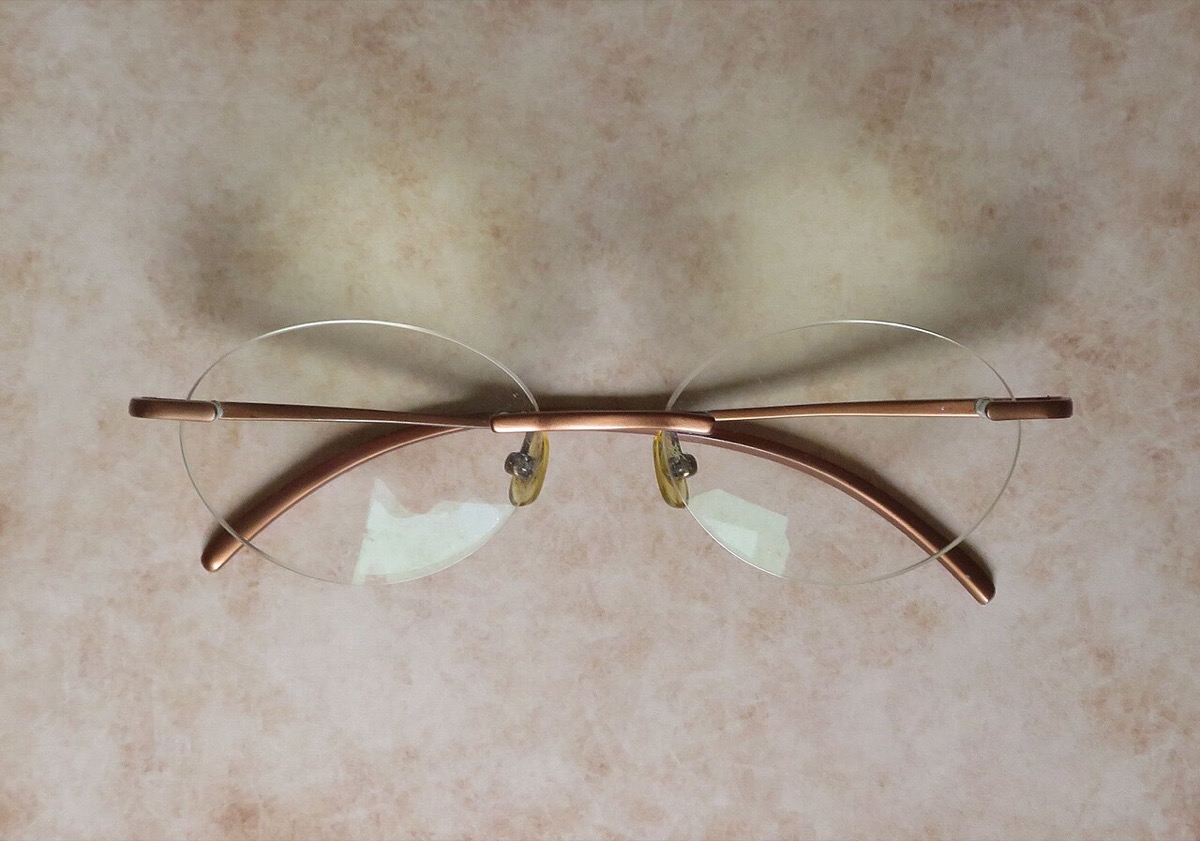
Opticians have the most consistent advice of any group here. All About Vision and Reliant Medical Group's optician both recommend frame shapes that are wider at the bottom, and Vision Express calls the same idea bottom-heavy frames. Weight low on the frame balances a wide forehead and narrow chin. Thin, light-colored or rimless frames are the other safe route, because they keep attention off the broad upper third (All About Vision, Glasses Direct, Vision Express). Oval frames are a sensible first try; Glasses Direct notes they don't overemphasize the cheekbones.
What to avoid is the mirror image: heavy, decorated top bars and browline frames, which add width where the face is already widest. WebMD names aviators as a top pick for heart faces while other guides don't mention them, so aviators are worth trying on rather than buying blind. These are optician conventions.
For beards, barbers quoted by FashionBeans suggest keeping the cheeks short, close to stubble, and leaving more length on the chin and moustache. Philips frames the goal as giving more weight to the jaw. The two disagree on full beards: FashionBeans says avoid one, Philips says a short or full beard can work. If you can grow a full beard evenly, the safer version is fuller at the chin and lighter on the cheeks, never puffed out at the sides.
Your heart-shape plan for this week
Start with what you can reverse tonight.
- Scan a straight-on photo on the face shape detector and confirm the top result. If heart is within a few points of oval or diamond, read that shape's advice too and use the tips the two share.
- Move your part off center today. It costs nothing and is the most widely agreed no-bangs change for a heart shape (stylist convention).
- Next time you buy frames, try on a bottom-heavy pair, a rimless pair and an oval pair side by side, and photograph each from the same distance (optician convention).
- If you wear makeup, try the C-shaped blush placement and move contour from the jaw to the temples (makeup-artist convention).
- At your next cut, ask for fullness or waves that land at or just below the chin, and soft side-swept or curtain bangs if you want a fringe. Say no to a heavy blunt fringe (stylist convention).
- For profile photos, stand back: research by Bryan, Perona and Adolphs (2012) found the same faces photographed at 45 cm were rated less attractive, trustworthy and competent than at 135 cm, so use the rear camera's 2x lens and step away.
Questions people ask
- How can I know if my face is oval or heart shaped?
- Compare your forehead with your jaw. In an oval face the forehead is only slightly wider than a softly rounded jaw and the cheekbones are the widest point. In a heart shape the forehead is clearly the widest part (or ties with the cheekbones) and the jaw is pulled in, often to a pointed chin. On FaceCheckup, a heart reading usually shows a forehead close to your cheekbone width and a jaw noticeably narrower than an oval's.
- Is a heart shaped face the same as an inverted triangle?
- Yes, in practice. Opticians call the heart shape a base-up triangle: wide at the top, narrow at the chin, which is what 'inverted triangle' describes. Be careful with plain 'triangle', though: most optical guides use it for the opposite shape, a jaw wider than the forehead.
- Do I need a widow's peak to have a heart shaped face?
- No. A widow's peak is often mentioned alongside the heart shape, but none of the stylist or optician definitions we use require one. The shape is about the widths of your forehead, cheekbones and jaw.
- Which bangs suit a heart shaped face?
- Soft, side-swept bangs or curtain bangs that are a little longer at the outer edges. Stylists quoted by Matrix, TODAY and Huda Beauty recommend them because they cover the widest part of the forehead. Heavy, blunt bangs are the style to skip.
- Can a man have a heart shaped face?
- Yes. The definition is the same for any face. Barbers suggest texture and movement on top, avoiding slicked-back styles, and a beard that is fuller at the chin than on the cheeks. Our male face shapes guide has the full men's plan.
- Why does one app say heart and another say oval?
- Because the boundary between them is a few percent of width, and photos shift those widths. A turned head, a smile, hair over the temples or a close-up selfie all move the outline. Our scanner shows its closest shapes with percentages and the widths behind them, so you can see when you're on the border.
Sources & further reading
- Anna De Souza, quoting Paul Labrecque (TODAY): Need a haircut? Here's how to get the best style for your face shape
- Anna De Souza, quoting Edmondo Blando (TODAY): The most flattering bangs for your face shape
- Erinn Morgan, reviewed by Chloe Tauaefa, ABOC (All About Vision): The Best Glasses for Your Face Shape and Skin Tone
- Laura Evans (All About Vision): Glasses frames for heart-shaped faces
- Dr. Catherine Ong, OD (Zenni Optical): What Is My Face Shape?
- Susan P. Tarrant (Eyecare Business, 2001): All Shapes and Sizes
- L'Oréal Paris USA: The Best Haircuts for Your Face Shape
- Jackie Summers (Matrix): How To Choose The Best Hairstyle For Your Face Shape
- Revlon Professional: What Hairstyle Suits Me?
- Nicole Catanese and Krista Carter (InStyle via AOL, 2024): Celebrity hair stylists explain the best cuts
- Lia Mappoura (Cosmopolitan via AOL, 2025): Best haircuts and styles for every face
- Allie Shah (Seattle Times / Star-Tribune, 2006): Face shapes for haircut dos and don'ts
- Huda Beauty: Best bangs for your face shape
- Adam Hurly, quoting Matty Conrad (GQ Middle East): What's the best haircut for your face shape?
- Maybelline India: 7 eyebrow shapes for different face types
- Rush Hair & Beauty: Best eyebrows for your face shape
- Erika Stalder (Refinery29): Different eyebrow shapes
- Fox News Lifestyle, quoting Anastasia Soare: Get the perfect eyebrow shape for your face
- Roberto Rodriguez (L'Oréal Paris USA): Blush by face shape
- Maybelline (2025): How to contour by face shape
- Patrick Ta Beauty: How to contour and highlight based on your face shape
- Anissa Gabbara (AARP Sisters): Easy contouring tips to balance your face shape
- Amber Felton, reviewed by Whitney Seltman, OD (WebMD): How to pick the right glasses for your face shape
- Dan Delisle, Registered Optician (Reliant Medical Group, 2022): How to choose eyeglasses that suit your face
- Vision Express: Face shape style finder
- Glasses Direct: Face shapes
- Al Hardacre (FashionBeans): The right beard for your face shape
- Philips: The best beards for face shapes
- Bryan R, Perona P, Adolphs R (2012), PLOS ONE: Perspective distortion from interpersonal distance is an implicit visual cue for social judgments of faces
- Google (2022): Model Card, MediaPipe Face Mesh V2
Read next
- Face shapes
Face shapes explained: oval, round, square, oblong, heart, diamond and triangle, how stylists define each, and a free detector with no sign-up.
- Face shape detector
Face shape detector that's free with no sign-up and runs on your device: it measures forehead, cheekbones, jaw and length, then gives your top two shapes.
- Oval face shape
Oval face shape: longer than wide, widest at the cheekbones, softly rounded jaw. How to tell oval from oblong or round, and the cuts and frames that suit it.
- Diamond face shape
Diamond face shape: widest at the cheekbones with a narrower forehead and jaw. How to tell it from oval or heart, and the hairstyles and glasses that suit it.
- Haircut finder
Haircut depending on face shape: scan one photo free, no sign-up, to find your shape, then see sourced cuts to try and to avoid, for women and men.
- Eyebrow shapes
Eyebrow shapes explained: soft arch, high arch, straight, rounded and S-curve, matched to your face in a free scan with no sign-up and a three-point map.
Part of Face shapes. Take the full free attractiveness test on the FaceCheckup home page.
Sukie · Founder and editor
Sukie built FaceCheckup because she always wanted a face tool that explains its numbers and tells you what to do with them, and nothing on the market did both. She checks every measurement on the site against published research and labels every tip for what it is: research, or stylist convention.
About this site · How pages are checked · Last updated October 23, 2026
FaceCheckup is for information and entertainment. It measures proportions in one photo; it is not a medical, psychological or cosmetic-surgery assessment, and it cannot tell you your worth.