Thirteen published group averages, from Korea to South India to Japan, and every one of them is positive. That is the first thing to know about positive canthal tilt: it describes most eyes, so asking whether you have one is less like asking about a rare trait and more like asking how much of a common one you have.
This page answers the two questions people actually type, “do I have a positive canthal tilt?” and “is it rare?”, with a measurement on your own photo, the published numbers behind it, and an honest look at the two experiments that tested whether a lifted outer corner changes how a face is judged. They point in opposite directions.
Positive, neutral, negative: where the line is
Canthal tilt is the angle of the line from the inner corner of the eye (the medial canthus) to the outer corner (the lateral canthus), compared with horizontal. If the outer corner sits higher, the angle is positive and the eye reads as upturned. Level corners are neutral. A lower outer corner is negative, which beauty guides call a downturned eye. Clinique's eye-shape guide describes upturned eyes in exactly these terms: inner corners that dip and outer corners that lift.
There is no official cut-off between “neutral” and “positive”. Researchers simply report the angle in degrees. FaceCheckup's style plan needs a working line, so it treats anything above +2° as positive, anything below −2° as negative and the band in between as neutral. That ±2° band is deliberately wide, because a corner point placed a millimetre off moves the angle by about two degrees on an adult eye (more on that below).
Two words you'll see in looksmaxxing threads, hunter eyes and fox eyes, are not measurements at all. They are informal labels that bundle a positive tilt with other things, such as a low brow, little visible upper lid or a long eye. Nothing in the research we use defines them, so this page sticks to the angle you can actually measure. If you want the full picture of tilt in both directions, the canthal tilt guide covers it.
Is a positive canthal tilt rare? What the studies measured
No. The chart below plots every population average we could trace to a paper we read. The lowest is 1.2°, in a sample of Indian women quoted by Packiriswamy and colleagues (2012). The highest is 9.64°, also an Indian sample, quoted in the same paper from Hanada's work. The two largest studies we read in full put men and women at 4.71° and 7.05° (300 Malaysian South Indian adults, Packiriswamy et al. 2012) and at 8.5° and 8.8° (996 Korean adults, Choi and Park 2002).
So if your scan shows a positive tilt, you are in line with the average of every group in that list. What the papers don't publish is the share of people above or below zero, so any “only 15% of people have a positive canthal tilt” figure you've seen has no source we could find. The honest version is: averages are positive everywhere they have been measured, and individuals spread around them by roughly 2° to 3° (one standard deviation) in the large studies.
Do I have a positive canthal tilt? Measure it the right way
Most of the “do I have positive or negative tilt?” posts on looksmax.org end the same way: someone points out that the photo was taken from below, or with the head tipped, and the answer changes. That is the real problem with eyeballing tilt. The outer corner sits further back on the head than the inner corner, so tipping your chin down raises the outer corner in the picture and makes a tilt look more positive.
When we rotated Google's MediaPipe canonical face model and measured it the way a basic calculator does, a 10° chin-down tip added about 2.5° of tilt and a 10° chin-up tip took about 2.5° away. That is a geometry result for one template face, set out in full on the canthal tilt page, but it shows why a selfie taken from slightly above can manufacture a positive tilt.
FaceCheckup rotates your landmarks so the line between your pupils is level, and uses the 3D landmarks to bring a slightly turned or tipped head back toward frontal, before it measures each eye. You still get the best reading from a good photo:
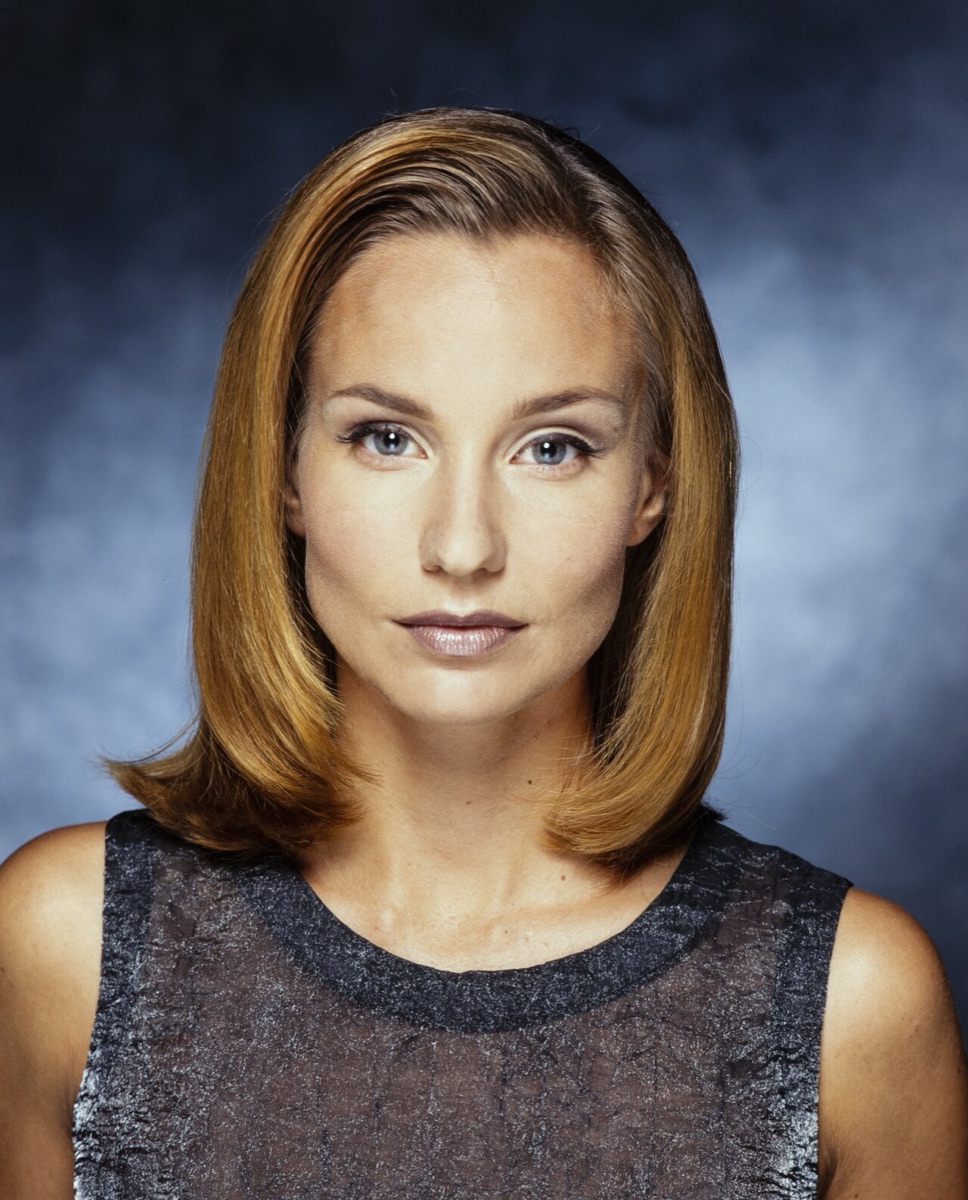
- Glasses off, hair away from the outer corners.
- Phone propped at eye level about 1 to 1.5 m away, with the timer or the rear camera's 2x lens. Close-range photos change facial proportions (Ward et al. 2018; Bryan, Perona and Adolphs 2012).
- Chin level, eyes on the lens, relaxed face. A smile lifts the lower lids and moves the outer corners, so keep your mouth closed and neutral.
- Run the scan above, turn on the Eye tilt layer and check that the four corner dots sit on your actual eye corners.
- Repeat on another day. If two readings agree within a degree or two, trust the result; if they don't, the photo is the problem.
Is a positive canthal tilt more attractive? Two experiments, two answers
The claim that a positive tilt is attractive usually traces back to one study. Bashour and Geist (2007) showed people pairs of female faces, one unmodified and one edited to accentuate the tilt, and the edited face was picked 93% of the time. That is a strong result, but it is a forced choice between two versions of the same faces, it used female faces only, and the abstract does not report how many judges took part.
A much larger study points the other way. Kempa and colleagues (2025, Journal of Plastic, Reconstructive and Aesthetic Surgery) had 2,081 participants, average age 26.5, rate edited versions of one unisex face on a five-point scale. Raising the outer eye corner lowered ratings of attractiveness, femininity, masculinity and trustworthiness, and raised ratings of dominance, threat and disgust. Raising the brows did much the same, and combining the two strengthened the effect.
The two designs differ, and neither one rated real, unedited faces from the general population, so neither settles the question. What they do show is that “more tilt is better” is not an established finding. Add the fact that private taste explains roughly as much of anyone's attractiveness judgements as shared taste does (Hönekopp 2006), and a few degrees of tilt starts to look like a small part of how a face is read.
Similar effects were observed with lateral canthus elevation, impacting attractiveness, femininity, masculinity, and trustworthiness negatively, while enhancing dominance, threat, and disgust.
— Kempa et al. (2025), results section of the abstract, n = 2,081 raters
Can you get a positive canthal tilt?
Not by exercise, taping or mewing. The bone and tendon positions that set the eye corners don't change with facial exercises, and a 2025 systematic review found the evidence for mewing changing facial structure to be sparse and anecdotal. Surgical options exist, but they are a conversation for a qualified surgeon, not a website, and this site doesn't give surgical advice.
What does change the look of the eye is makeup and brows, and the sources we use agree on a few techniques. They work by drawing the eye upward, not by changing the corners themselves:
- If your tilt already reads positive: tightline the upper lash line and follow the eye's own upward curve with a small wing; most liner styles suit upturned eyes (Makeup.com by L'Oréal, quoting Sara Wren and Shreni Patel; stylist convention).
- Keep liner thin at the inner corners, because thick inner liner can make any eye look smaller (Makeup.com by L'Oréal; stylist convention).
- If your tilt reads neutral or slightly negative and you want a lifted look: thicken the liner over the outer third and flick it slightly up and out, judging the wing with your eyes open (Charlotte Tilbury; Makeup.com by L'Oréal, quoting Rommy Najor).
- Brush and fill the brow tails upward toward the temples, keeping the tail no lower than the brow head (L'Oréal Paris; HighBrow Beauty). The eyebrow shapes guide maps where the tail should end.
What else changes how upturned your eyes look
Tilt is only two points per eye. Several other features change whether eyes read as lifted, and the scan measures some of them. Eye openness (visible height ÷ width) affects how much the angle shows: a narrower eye with a positive tilt reads as more slanted than a round eye with the same angle. Brow height, measured from the upper lid to the top of the brow, changes the frame around the eye. And a tilt difference between left and right is normal: the result shows it separately, and a gap of a degree or two is inside the landmark error.
Lid shape matters too, but a landmark scan can't see it. A hooded lid, where skin folds over the movable lid, can make the outer part of the eye look heavier than its corners are. If your scan says positive but your eyes look downturned to you, a hood is a likely reason. The negative canthal tilt guide explains how to tell a low corner from a heavy lid.
Finally, the precision limit. Google's model card for the landmarker reports that points land, on average, 2.06% to 3.85% of the distance between the eyes away from where human annotators place them, which is roughly 1.3 to 2.4 mm on an adult face. On an eye about 30 mm wide, a corner a millimetre off moves the angle by about 2°. That is why a reading of +1° is better described as “level” than as “slightly positive”, and why we set the positive line at +2°.
How to read your result above
The eyes section of your result shows canthal tilt averaged across both eyes with a ± range, the left-versus-right difference, eye openness and brow height. Next to the tilt you'll see the published span from the two large studies, group averages 4.7° to 8.8° and roughly 2° to 11° within one standard deviation, as context. The tilt is not part of the Balance Score; the how it works page lists what is.
If your number is above +2°, your style plan shows the positive-tilt liner rules. Between −2° and +2°, you'll see neither the positive nor the negative set, because the corners are level within the error. If one eye reads positive and the other negative, retake the photo first: head roll pushes one eye up and the other down by the same amount, and the level correction can only remove what the landmarks show.
Whatever the number, it describes an angle, not a verdict. The broader facial symmetry test and the face-shape tools on this site work the same way: measurements with their limits stated, and no ranking of you as a person.
Questions people ask
- What does positive canthal tilt mean?
- It means the outer corner of the eye sits higher than the inner corner, so a line between them slopes upward toward the temple. Beauty guides call this an upturned eye. The angle is measured in degrees against horizontal.
- Is positive canthal tilt rare?
- No. Every published population average we found is positive, from 1.2° to 9.64°. No study we read reports the percentage of people with a positive, neutral or negative tilt, so treat any percentage you see quoted with suspicion.
- What is a good positive canthal tilt in degrees?
- No peer-reviewed study we could find sets an ideal tilt in degrees, for women or men. Ranges like 5° to 8° come from forums. The large studies we read put group averages between 4.7° and 8.8°.
- Do men or women have a more positive canthal tilt?
- It depends on the sample. Malaysian South Indian women averaged 7.05° against 4.71° for men, while Korean men and women were almost the same at 8.5° and 8.8°, with no significant difference.
- Can a photo make my canthal tilt look positive?
- Yes. Tipping your chin down raises the outer corners in the picture, by about 2.5° for a 10° tip on Google's canonical face model, and a camera held above the face has a similar effect. Use a level, straight-on photo from 1 to 1.5 m.
- Is positive canthal tilt the same as hunter eyes?
- Not exactly. Hunter eyes is an informal forum label that usually combines a positive tilt with a low brow and little visible upper lid. Only the tilt is a defined measurement, and it is the one FaceCheckup reports.
Sources & further reading
- Choi YS, Park KM (2002), J Korean Cleft Palate-Craniofac Assoc: canthal slant in 996 Korean adults
- Packiriswamy V, Kumar P, Rao M (2012), N Am J Med Sci: palpebral fissure inclination in Malaysian South Indians (with quoted cross-population values)
- Vasanthakumar P, Kumar P, Rao M (2013), Oman Med J: palpebral fissure inclination in South Indian adults
- Bashour M, Geist C (2007), Ophthalmic Plast Reconstr Surg: Is medial canthal tilt a powerful cue for facial attractiveness?
- Kempa J et al. (2025), J Plast Reconstr Aesthet Surg 104:417–425: eyebrow and lateral canthal height and perceived character traits, 2,081 participants
- Hönekopp J (2006), J Exp Psychol: Human Perception and Performance: Once more: is beauty in the eye of the beholder?
- Seraj et al. (2025), Aesthet Surg J Open Forum: systematic review of mewing evidence
- Google: Model Card, MediaPipe Face Mesh V2 (landmark accuracy)
- Ward B et al. (2018), JAMA Facial Plastic Surgery: Nasal distortion in short-distance photographs: the selfie effect
- Bryan R, Perona P, Adolphs R (2012), PLOS ONE: Perspective distortion from interpersonal distance
- Clinique Skin School: Makeup for every eye shape
- Jordan Julian (quoting Sara Wren and Shreni Patel), Makeup.com by L'Oréal: 9 pro makeup tips for upturned eyes
- Jessica Harrington (quoting Rommy Najor), Makeup.com by L'Oréal: How to apply eyeliner to downturned eyes
- Charlotte Tilbury: How to apply eyeliner for downturned eyes
- L'Oréal Paris Beauty Magazine: Makeup tutorial for downturned eyes
- Beverly Harris, HighBrow Beauty: Eyebrow shapes to flatter your face
- Seppo Konstig (1999), Wikimedia Commons: studio portrait (CC BY 4.0)
Read next
- Canthal tilt
Canthal tilt is the angle from your inner to outer eye corner. Measure each eye free, no sign-up, with head-roll correction and published averages.
- Negative canthal tilt
Negative canthal tilt means the outer eye corner sits lower than the inner one. Check if yours is real or just the photo, and see makeup and brow options.
- Eyebrow shapes
Eyebrow shapes explained: soft arch, high arch, straight, rounded and S-curve, matched to your face in a free scan with no sign-up and a three-point map.
- Facial symmetry test
Facial symmetry test that mirrors 220 landmark pairs on your own photo, corrects head turn, and shows a ± range. Free, private, no sign-up.
Part of Canthal tilt. Take the full free attractiveness test on the FaceCheckup home page.

Sukie · Founder and editor
Sukie built FaceCheckup because she always wanted a face tool that explains its numbers and tells you what to do with them, and nothing on the market did both. She checks every measurement on the site against published research and labels every tip for what it is: research, or stylist convention.
About this site · How pages are checked · Last updated October 25, 2026
FaceCheckup is for information and entertainment. It measures proportions in one photo; it is not a medical, psychological or cosmetic-surgery assessment, and it cannot tell you your worth.